Table of contents
Before all this: Multunus
Before any of this, I ran a software studio called Multunus for nine years.
We built other people's products. Good work, reliable clients, steady revenue. But after nearly a decade, I had one itch I couldn't scratch: to stop building for others and finally build something of our own – in a space that helps people grow faster, achieve their goals and reach their dreams.
2017–2022 · Good Karma → PracticeNow Live
Helping people stay consistent
The journey started with something personal.
I was forty. And on my 4th or 5th attempt at building a consistent wellness practice.
My health was a mess. I kept quitting every few weeks.
Then one yoga studio in South Bangalore cracked something for me.
Once I enrolled there, I showed up. I kept showing up. Six months. A year. Two years.
And yet - nobody outside that room really saw it. My friends didn't notice. My family didn't track those tiny daily battles. Even the teachers were mostly drowning in logistics.
That gap - between how hard it is to keep showing up, and how little support people get for it - got under my skin.
Good Karma was our first attempt at fixing it. We tried to help studios nudge students to book trials, then track attendance, then manage subscriptions.
Pretty quickly, reality intervened.
Studios didn't just need "nudges."
They needed help with everything: payments, Zoom links, hybrid classes, international pricing, student communication.
That's how Good Karma evolved into PracticeNow - an operations backbone for independent teachers running live and recorded classes.
Today, PracticeNow serves thousands of users 24/7 across the globe.
The lesson: If you remove real friction, teachers will trust you with the backbone of their business.
But that backbone only matters because of one thing - the relationship between teacher and student. Our software had to quietly support that bond, not get in the way.
PracticeNow By the numbers
$5M+
Payments processed
5,000+
Teachers & students
80+
Countries
With PracticeNow, we've seen that teachers and students continue to trust us with their operations and payments.
But how could we move further up the value chain? Closer to the teaching itself?
What teachers said
Earlier, I would hardly sleep at the start and the end of each month. Students from different time zones would pay at 2 AM expect a Zoom link overnight. Also, when they transferred fees I just couldn’t figure out who did. PracticeNow has saved 80% to 90% of my time. I can find time to watch IPL, play with my children, do personal practice, learn something new.

Vikas Shenoy
As a teacher, my first love is always teaching. To be bogged down by all the other work was taking away from what I could do as a teacher. What’s more, team at PracticeNow actually cares and listens. Suggestions are actually heard. This makes a world of difference.

Rohini Manohar
What this looked like

Upcoming classes
A single schedule view that updates dynamically, stays timezone-aware, and makes it easy for students to join live classes in one tap.
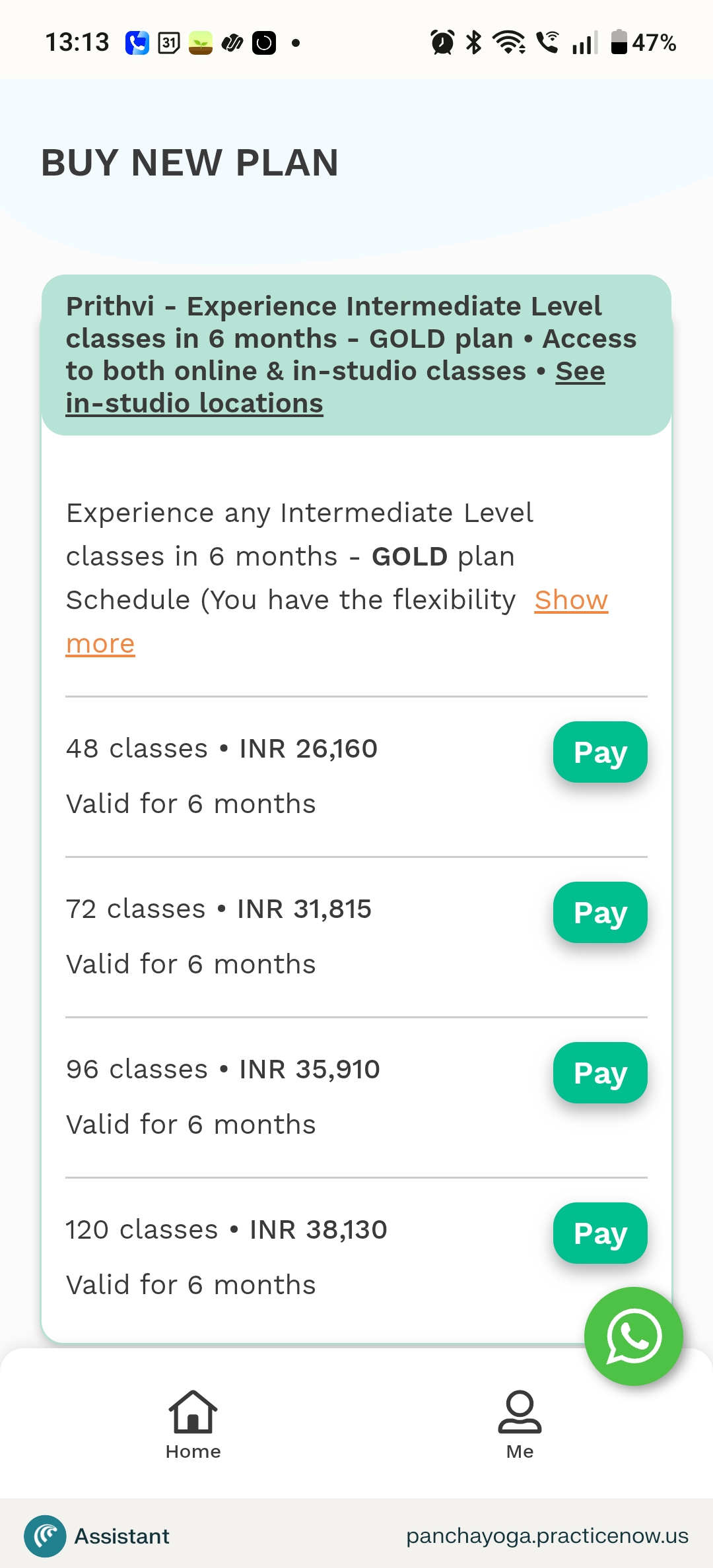
Plans & pricing
Students can discover subscription options, compare what’s included, and pick a plan that matches how they want to attend.
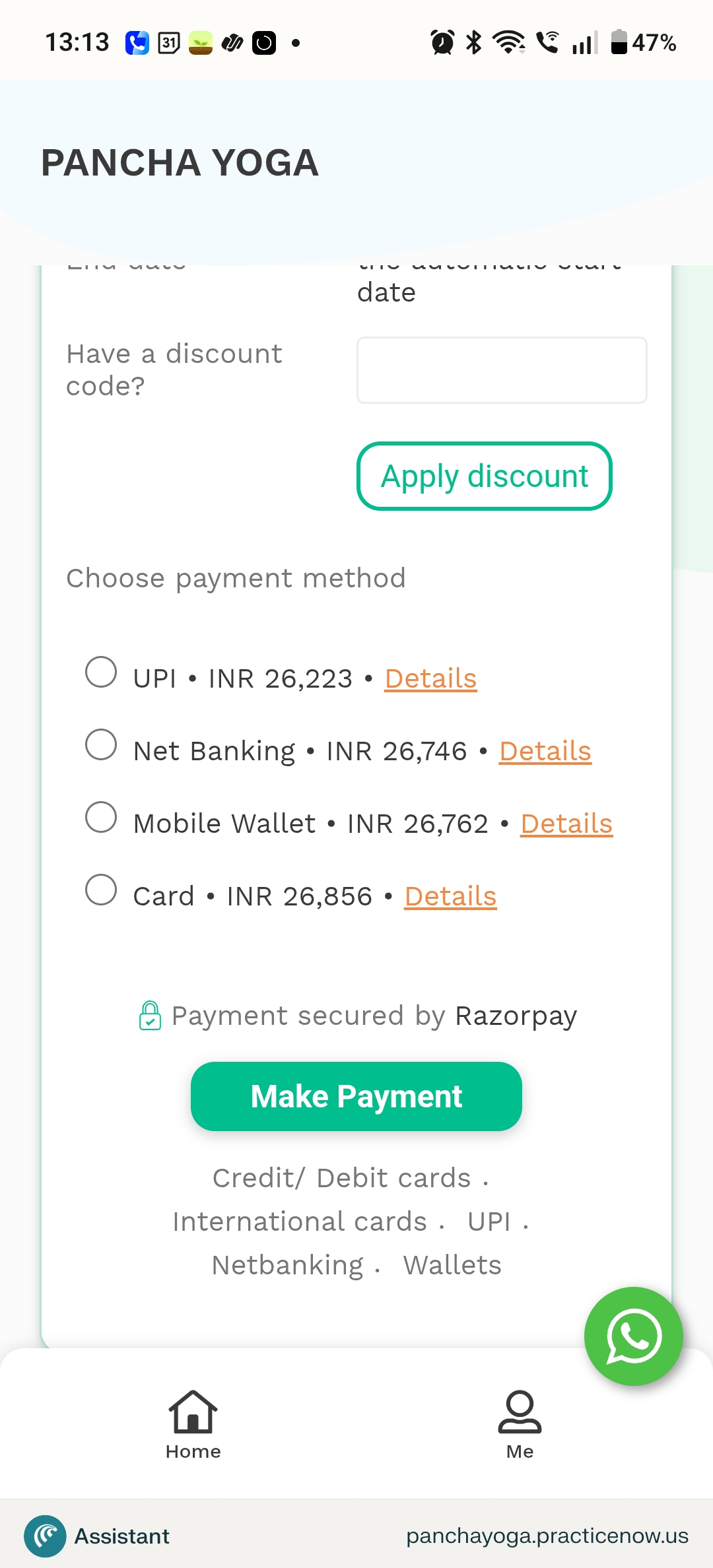
Checkout
Apply discounts and accept payments via Stripe / other gateways. We support multiple payment providers, and the payment methods available in each country typically map to whatever that provider supports locally.
Tap an image to view it full screen.
2022–2024 · Storyteller & AI Reels blockDead-ends
When beautiful AI plans met messy reality
PracticeNow was working. Teachers trusted us with their operations and payments across dozens of countries.
But I kept thinking: we're helping teachers run their business. What if we could help them grow it? What if we could move further up the value chain - closer to the teaching itself?
First came Storyteller. The idea: help teachers nurture leads with automated WhatsApp sequences built from their existing Instagram content.
On paper, it made perfect sense. In practice, we kept seeing the same pattern: unless the content was genuinely useful, no amount of automation could save it.
So we stepped closer to the content itself.
The AI reels (for Insta) idea sounded almost too good. You connect your Zoom account. We quietly scan your long classes for the best moments - clear explanations, satisfying "aha" reactions, strong audio. We turn them into vertical clips with captions, covers, and ready‑to‑post copy.
No editing timelines. No rewriting hooks. No exporting.
You just teach the way you already do. You wake up to a stack of reels and shorts.
In demos? Magic.
Teachers saw their own words come back as polished clips and said things like, "You mean I never have to record reels again?"
But the moment we went live with it in real classes, the cracks showed up fast.
Zoom recordings looked grainy and flat on Instagram. More than one teacher told us they'd rather post nothing than something that made them look unprofessional.
"Okay," we thought, "just use your HD camera phone, instead of Zoom."
Simple, right?
Wrong.
In hybrid studios it turned into a mess of extra tripods, two clip‑on mics, and constant anxiety about which device was actually getting good audio. Even when the hardware cooperated, the upload flow from high‑resolution phones into a browser‑based tool was painful enough that people quietly stopped doing it.
Worst of all? The product changed how some teachers felt while teaching.
Knowing that "the AI" was always watching nudged them out of the relaxed, responsive headspace their students loved. They started performing for a camera that might or might not behave.
On our side, the graphs told the story brutally: excited demos, a few early reels shipped, then usage tapering off to almost nothing.
We didn't walk away thinking "AI for creators doesn't work."
We walked away thinking we were pointing the AI at the wrong problem.
The real magic in those long sessions wasn't how they'd look chopped into a few seconds of social media. It was how much teaching was packed into them - and how little of that teaching students could reliably reuse.
The algorithms we built to find strong moments in 60–90 minute recordings didn't get thrown away. They became the backbone of how Spark finds chapters and micro‑sections today.
The painful part was everything we had to admit in order to make that shift.
What this looked like

Auto-generated reels
A vertical clip automatically cut from a long class - ready for social, without editing timelines, exporting, or re-recording.
See live Insta reel
The reel features Vikas (an early tester and the only teacher who truly put the product through its paces) - but one enthusiastic teacher isn’t enough to make the product successful.

Captions & cover
Fully AI generated captions, tailored to the teacher's intent and the student audience - no manual editing needed.
Tap an image to view it full screen.
2025– · Spark Beta
Finally pointing everything at learning
The wellness teachers who trusted us with PracticeNow taught us something crucial: serious educators need tools that respect how they already work, not force them into someone else's workflow.
But the patterns we kept seeing - long recordings full of teaching that students couldn't easily reuse, the gap between effort put in and learning that stuck - those weren't unique to wellness.
YouTube creators building courses from their back catalog. Corporate trainers with hundreds of hours in internal knowledge bases. High school tutors recording every Zoom session. University professors with lecture recordings piling up semester after semester.
Same problem. Different subjects.
The breakthrough came when we stopped looking at recordings as marketing fuel.
Your lectures. Your workshops. Your long‑form YouTube videos. Your Zoom recordings. They're full of frameworks, definitions, worked examples, off‑the‑cuff clarifications.
That's not "content." That's teaching.
The problem? Once the live moment is over, most of that effort evaporates.
The recordings sit in Google Drive or on YouTube. Your students rarely have the time or energy to rewatch a 90‑minute block just to remind themselves of one key idea.
We decided to see if we could bridge this gap. But to build a solution that actually worked, we needed a real‑world testing ground.
Two high school tutors – one teaching math, the other science to grades 8 through 12 – agreed to an unusual deal: no revenue at first, but full access to their Zoom accounts.
Thousands of hours of raw lecture recordings. That library became our test bed.
We built Spark to turn those raw recordings into structured micro‑courses: chapters, short sections (under 5 minutes each), notes, slides, quizzes, and a course‑specific tutor that stays inside your universe.
Here's what that looks like in practice:
What this looks like
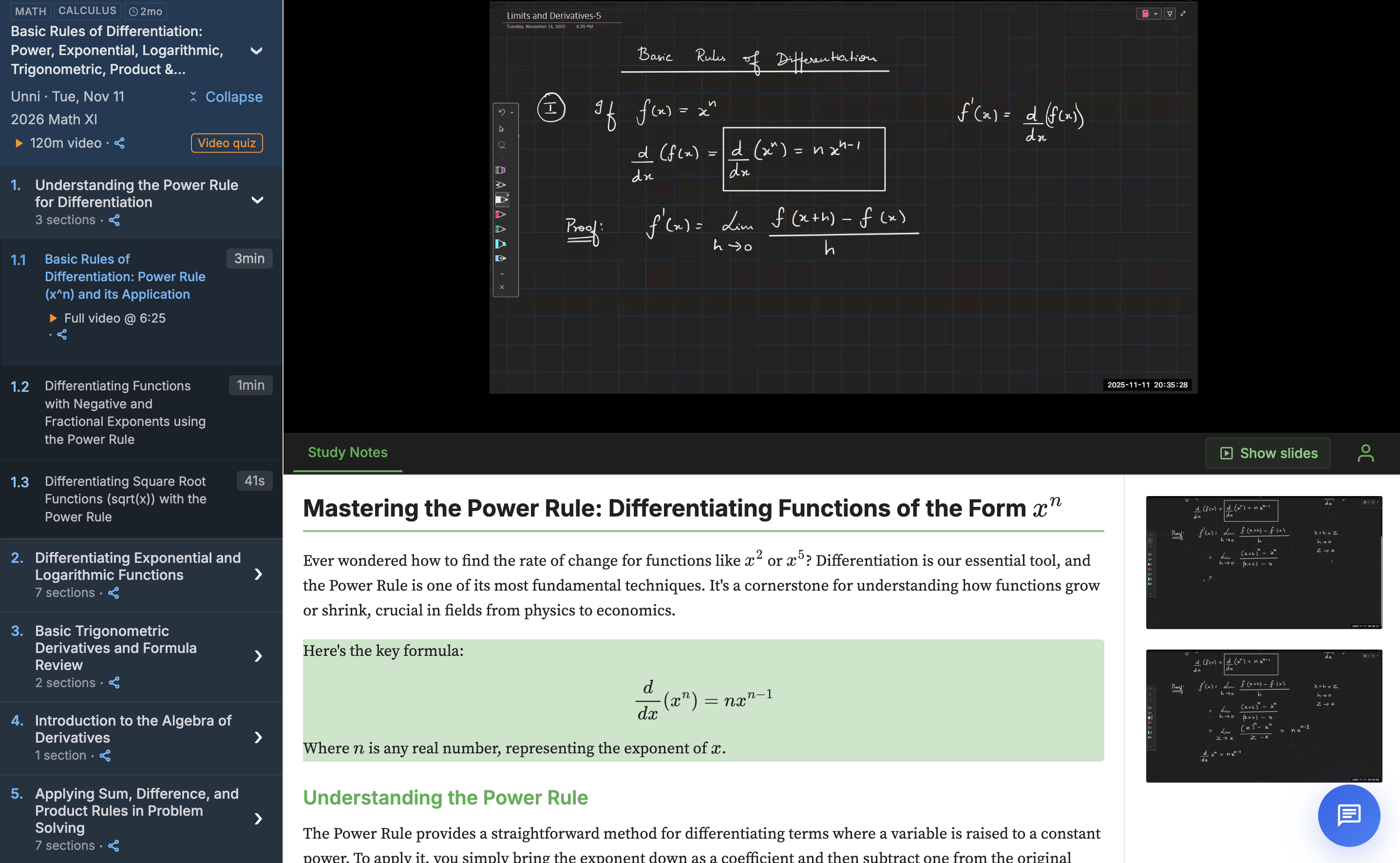
Course view
Chapters, notes, and a grounded tutor - in one student-friendly interface.
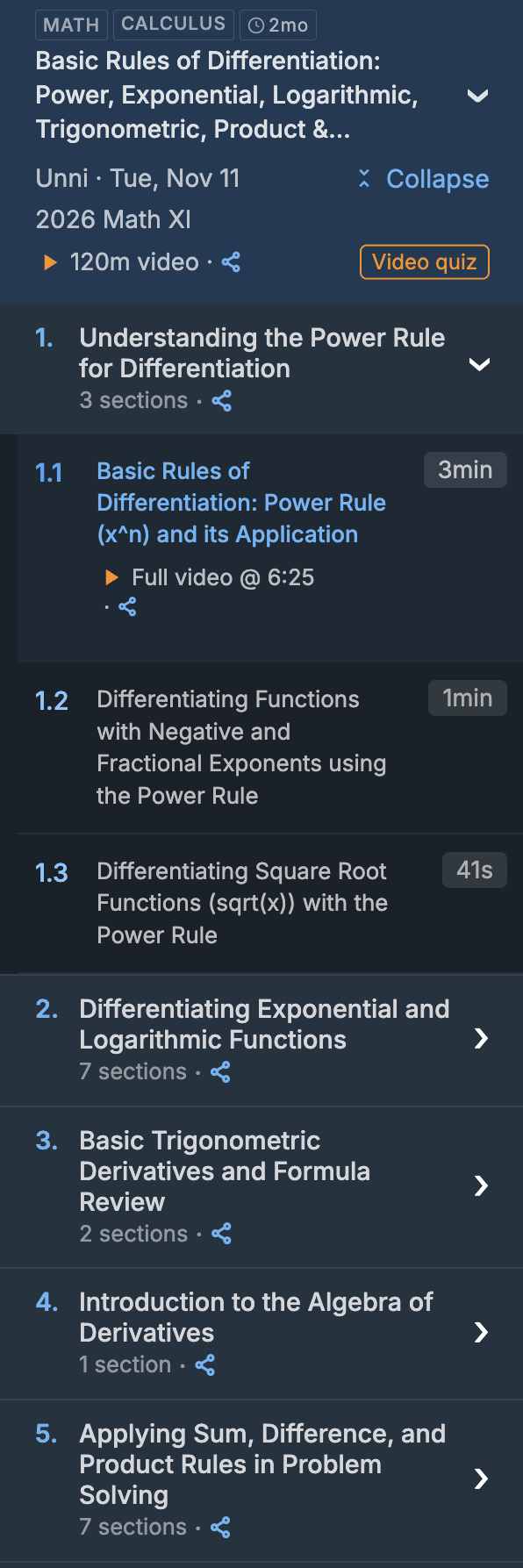
Course structure
Long recordings broken into short, searchable sections that are easy to revisit.
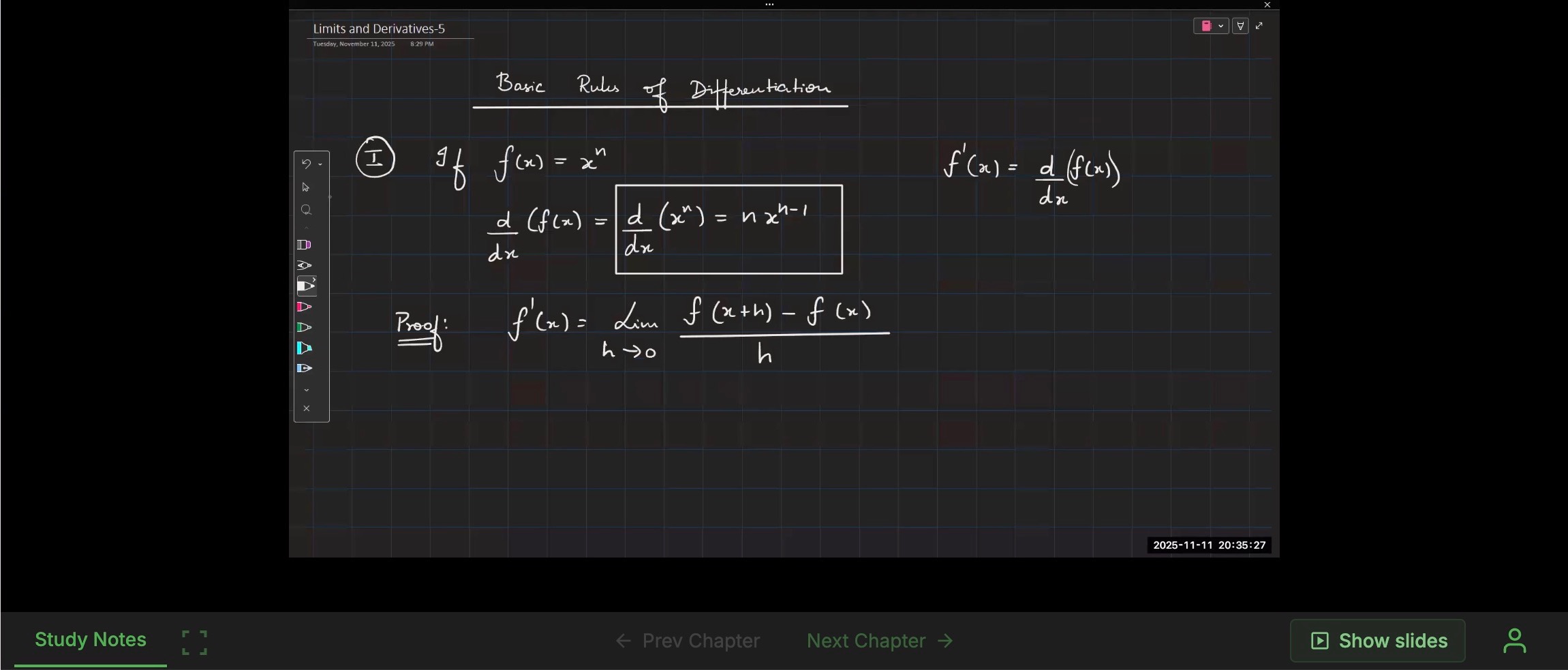
Video pane
Jump to any moment with chapters and context - no scrubbing required.
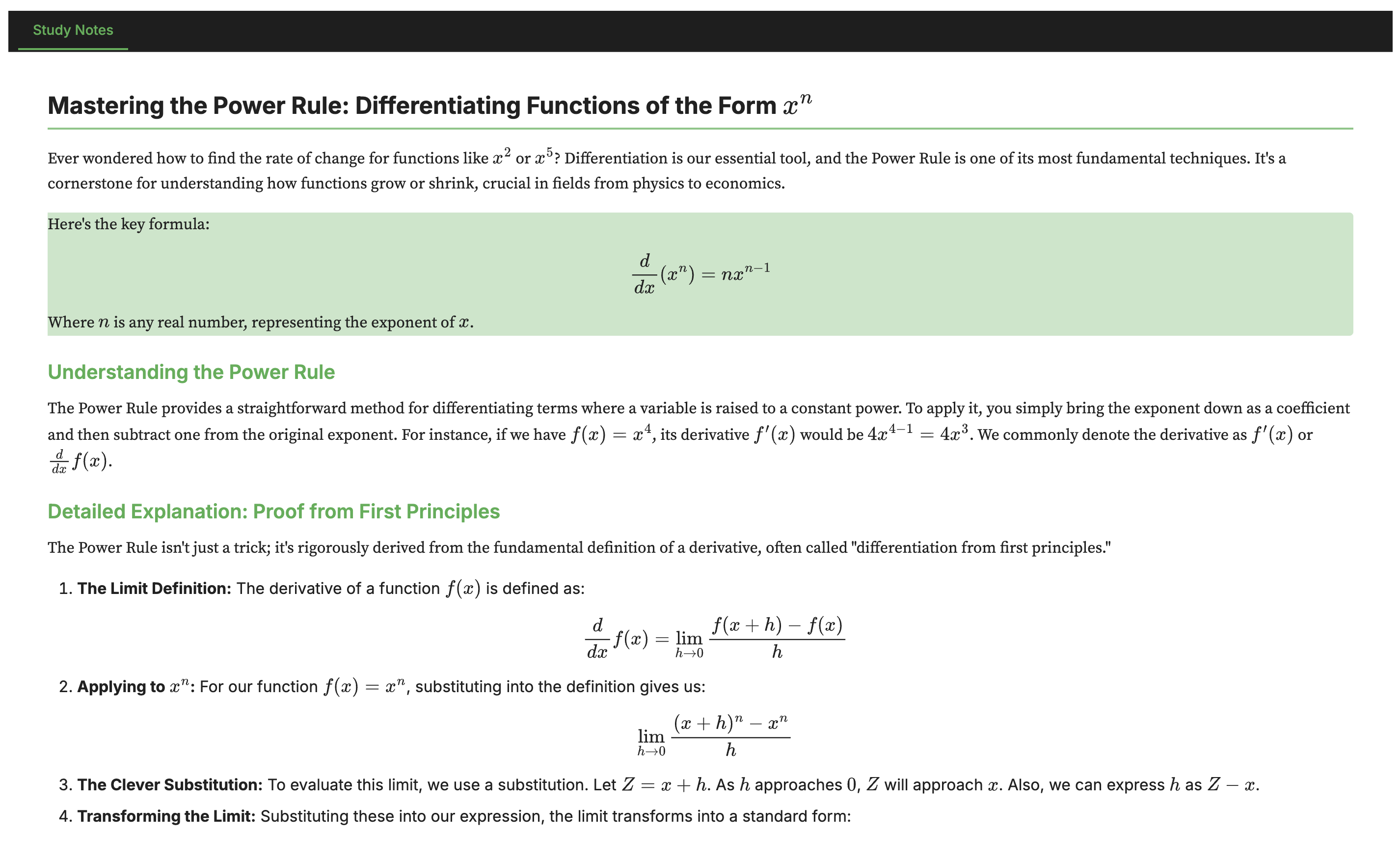
Study notes
Notes that track your exact course content and help students revise faster.
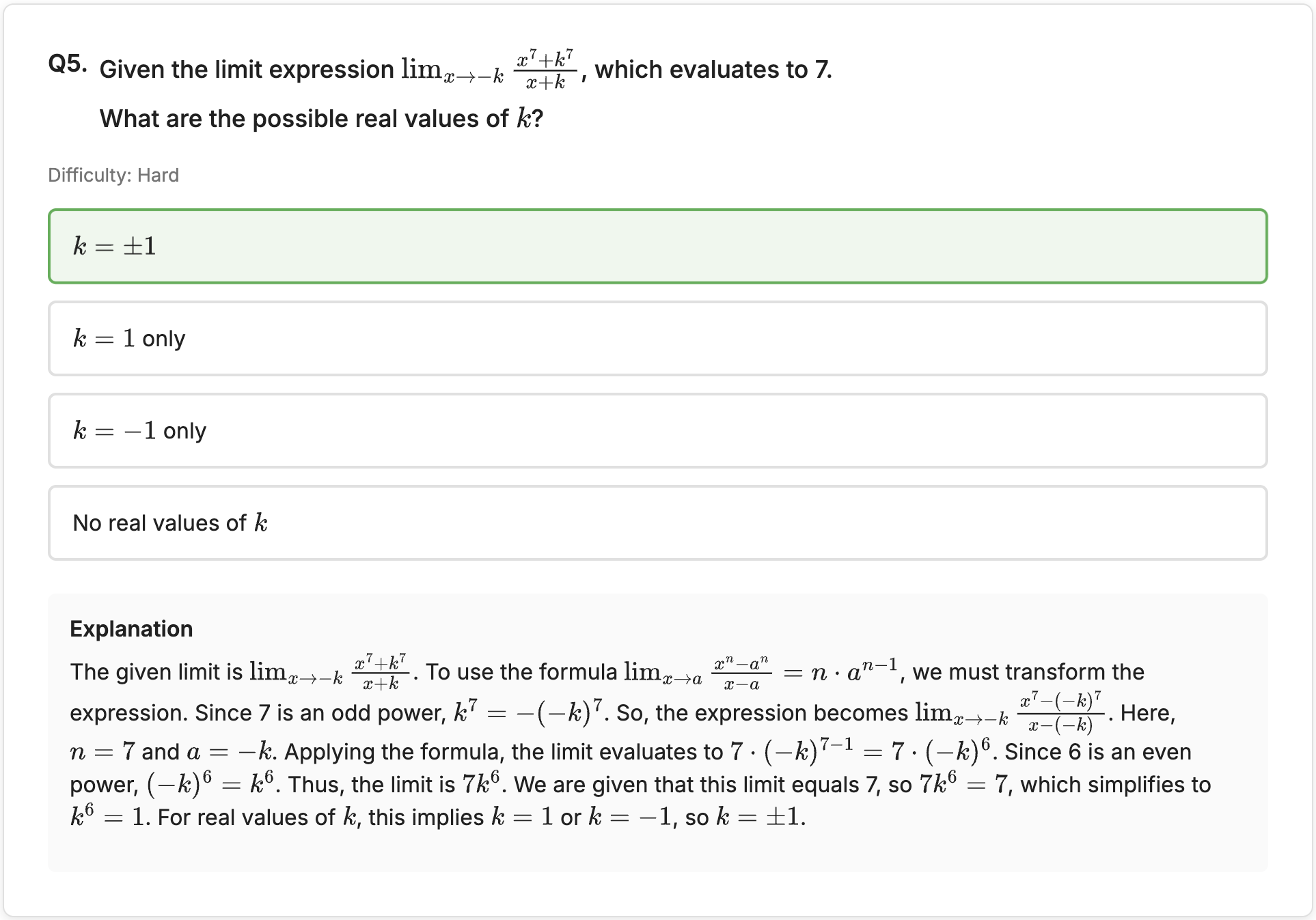
Quizzes
Quick checks that turn passive watching into active recall and retention.
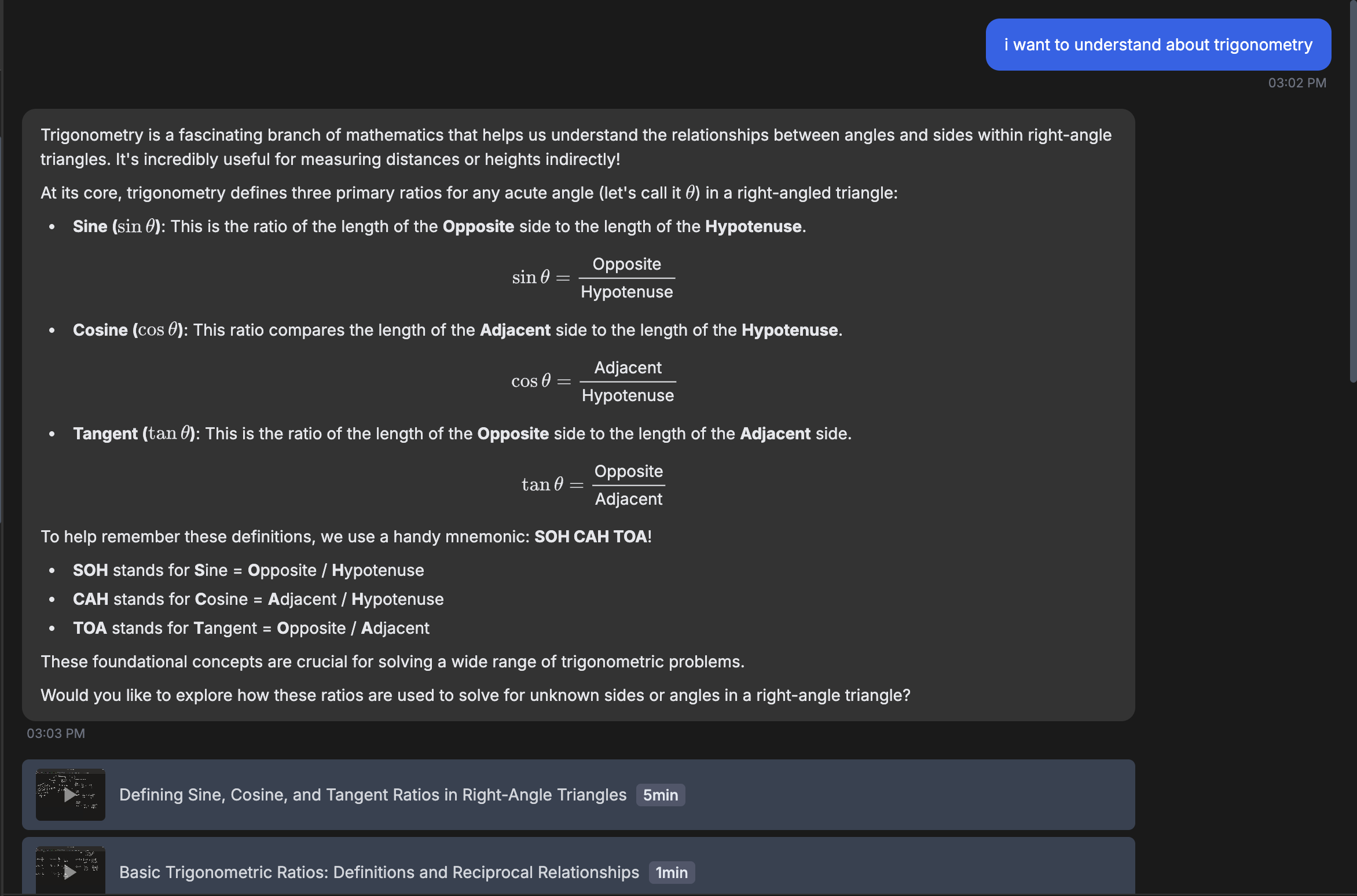
Course tutor
A tutor that stays grounded in your course universe - not generic web answers.
Tap an image to view it full screen.
A single 60‑minute session becomes a dozen or more short sections. Each one is self‑contained. Each one can be finished in under ten minutes with notes and a quick check.
Your students make progress in small, repeatable steps. They get a durable, searchable, well-indexed knowledge-base instead of a pile of forgotten recordings. They also get a personal tutor that can answer questions and guide them through the material.
If you already teach through long‑form video - whether you're a YouTube creator, a corporate trainer, a tutor, or a professor with semesters of lecture recordings - Spark is where your content finally points directly at learning: micro‑learning, frequent assessment, and a grounded tutor working together.
It's the first time we heard from teachers: "This feels like something my students can use to learn better."
What it costs to keep changing your mind
(And why we did it anyway)
Each pivot above came with a real cost.
Months of design and engineering thrown away. Features we were proud of that never made it to a launch video. More than one late‑night conversation about whether we should just "double down on what we already have" and stop changing direction.
If you've ever killed a project you loved because reality refused to cooperate, you probably know the feeling.
But every time we sat with real teachers and students, the same thing happened: the data from the classroom didn't match the story in our slide decks.
We could either protect our ego and keep pushing the old idea, or accept the hit, keep the learnings, and move one step closer to a product that actually helps people learn.
Spark is what you get when you choose the second option, over and over again.
What never changed
Across Good Karma, PracticeNow, Storyteller, the reels experiment, and now Spark, one thing hasn't changed.
We only build around teachers and learners.
The surface area kept changing - operations, lead nurturing, content automation, learning. Each version was an attempt to move further up the value chain, closer to the actual moment of teaching and learning. But the mission - to help teachers and students grow by making serious teaching easier to use and easier to stick with - never did.
Spark is the first version where all the pieces - micro‑learning, frequent assessment, and a grounded tutor - finally feel like they're pulling in the same direction.
What happens to PracticeNow?
For years, the operations backbone has lived publicly as PracticeNow: subscriptions, payments, virtual studio, secure video, reporting for live and recorded classes.
Over the coming months, those features will fold directly into Spark. The point: you shouldn't need one tool to turn content into courses and a separate "ops stack" to get paid for them. One product. One experience. From "turn my recordings into micro‑courses" all the way to "run and grow my teaching business."