Hallucinations & safety
How Spark keeps the AI on a short leash.
If students are going to learn from AI‑generated content, "close enough" is not good enough. Spark stays grounded in your actual lectures and raises its hand when it's unsure instead of bluffing.
Jump to a section
note_alt Study notes that are double‑checked, not free‑styled
For each chapter, Spark goes through a two‑step process: first, draft notes based on your lecture; then, a separate check asks "Is this scientifically correct?" and "Does this really reflect what the teacher said?"
If the second pass isn't confident, Spark tries small corrections a few times. If it still can't resolve the issue, the note is clearly marked for review instead of being quietly shipped as perfect.
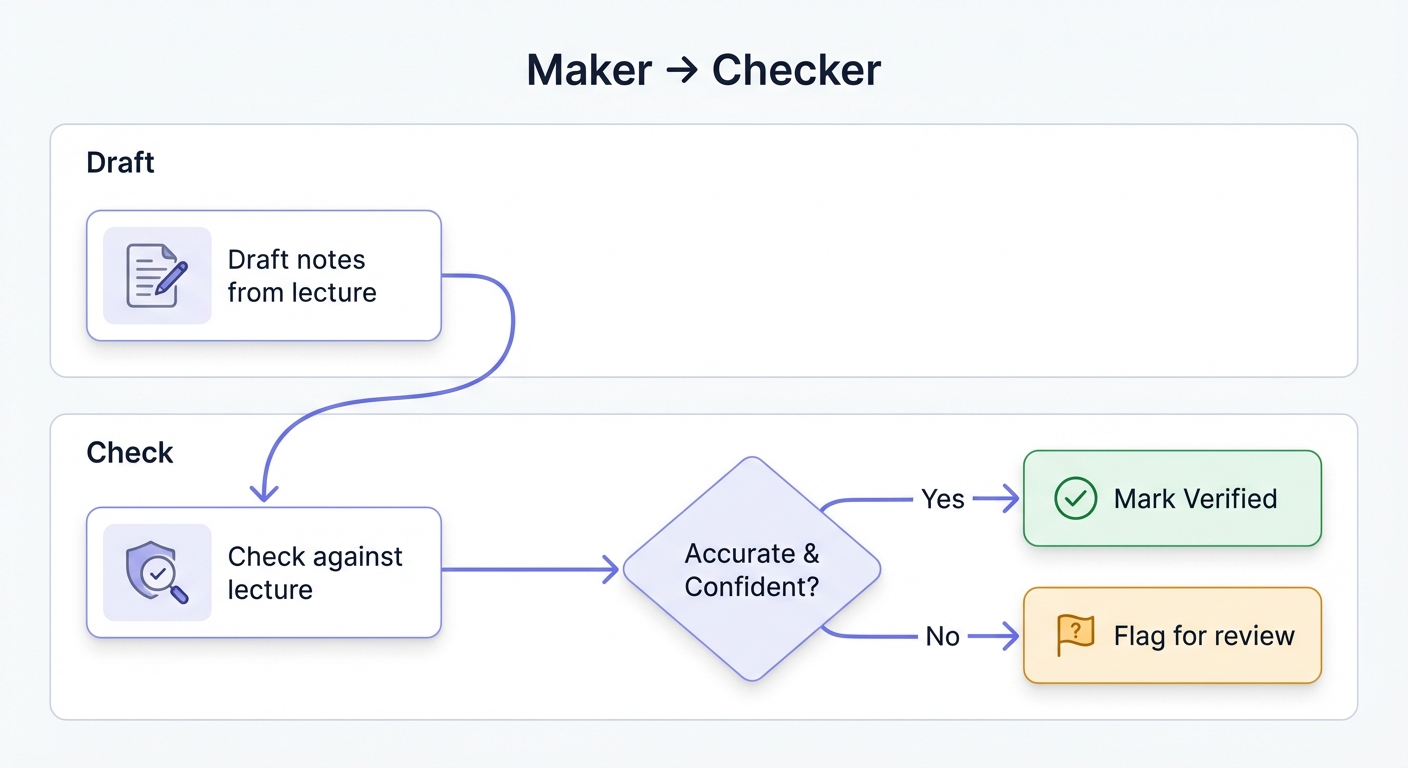
Maker-checker process
Two-step verification: draft notes first, then a separate check for accuracy and alignment with your teaching.
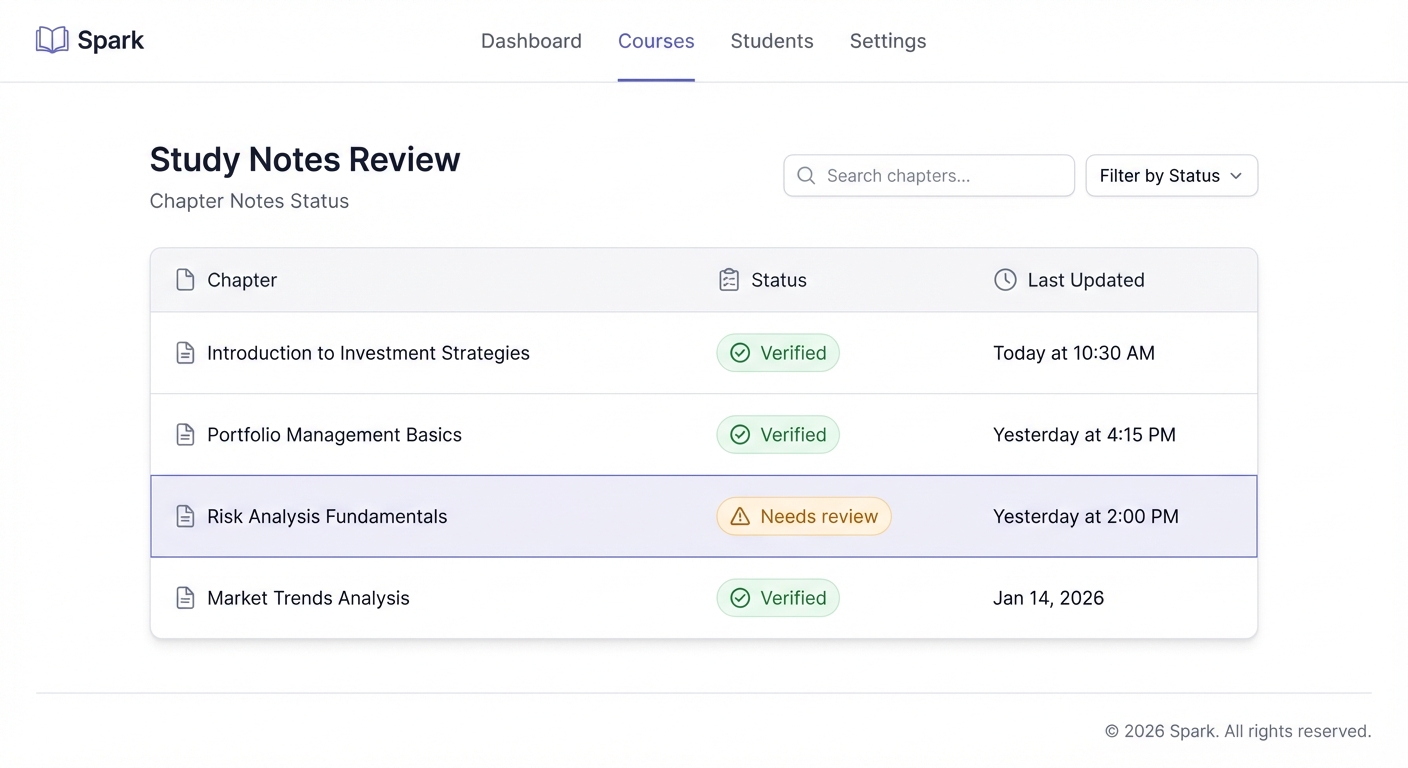
Review interface
Notes that need attention are clearly marked - you see issues before students do.
Tap an image to view it full screen.
-
check_circle
Two-pass system: generation first, then verification for accuracy and alignment.
-
check_circle
Automatic correction attempts before flagging - fixes what it can, surfaces what it can't.
-
check_circle
Broken formulas, strange characters, and unclear content get flagged for your review.
quiz Quizzes anchored in real chapters
Spark's quizzes are designed to be answerable from the material your students have actually seen. Each question is tied to one or more specific chapters, not to vague "topics in the air."
There are checks to make sure the correct answer matches the explanation and is actually supported by the relevant chapter. Questions that don't clearly belong anywhere, or that can't be fixed cleanly, are dropped rather than forced in.
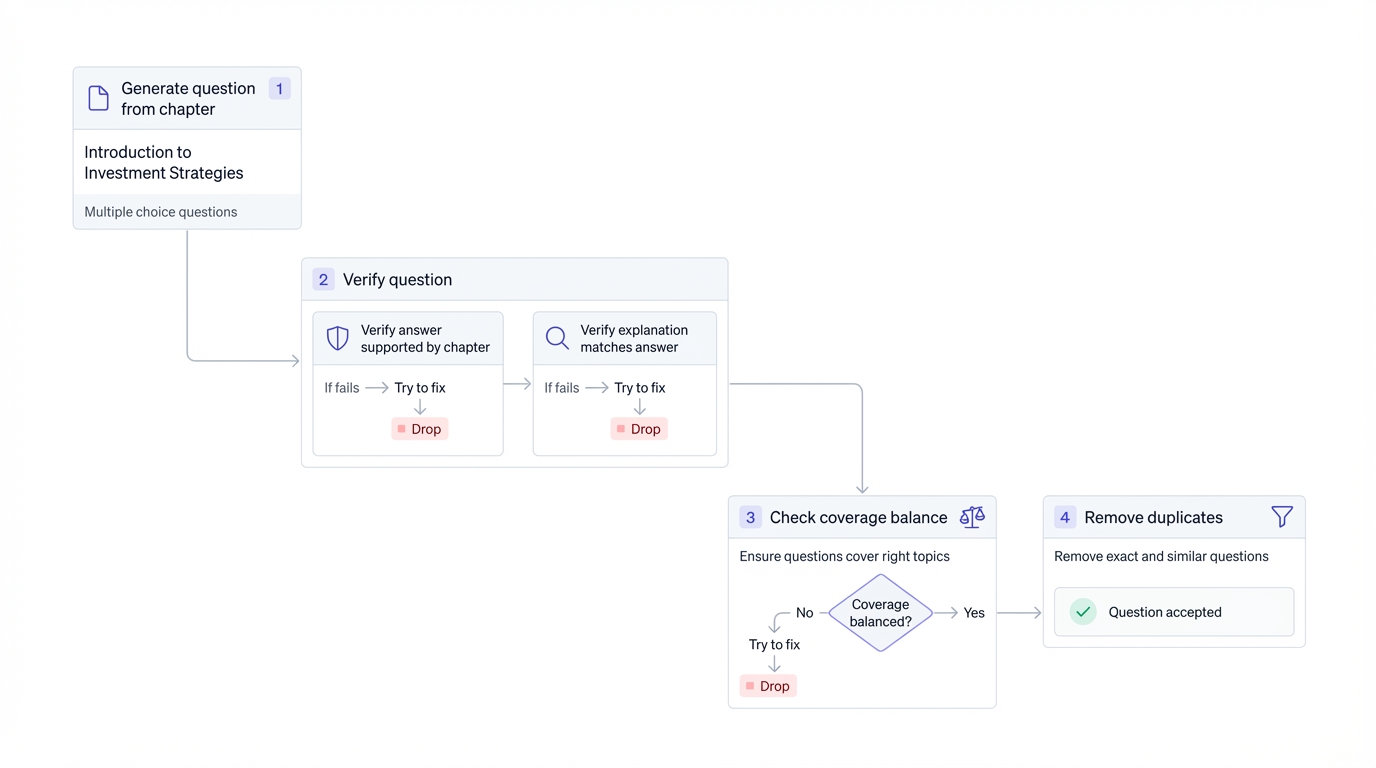
Question verification
Every question is checked against its source chapter - answer and explanation must align with what you actually taught.
Tap an image to view it full screen.
-
check_circle
Every question linked to specific chapters - students know what they're being tested on.
-
check_circle
Answer and explanation must match and be supported by the chapter content.
-
check_circle
Questions that can't be fixed are dropped - no forcing content that doesn't fit.
account_tree Chapters and slides that match what's actually on screen
Spark doesn't just trust the first guess about where chapters begin and end. It cross‑checks suggested boundaries against the real transcript, and if something looks out of order, it runs a dedicated fix‑up step instead of silently slicing the video in the wrong place.
The same spirit applies to slides and key frames: visual duplicates are detected and removed, and if Spark can't find any usable slides for a chapter, it surfaces that as a visible issue rather than pretending everything is fine.
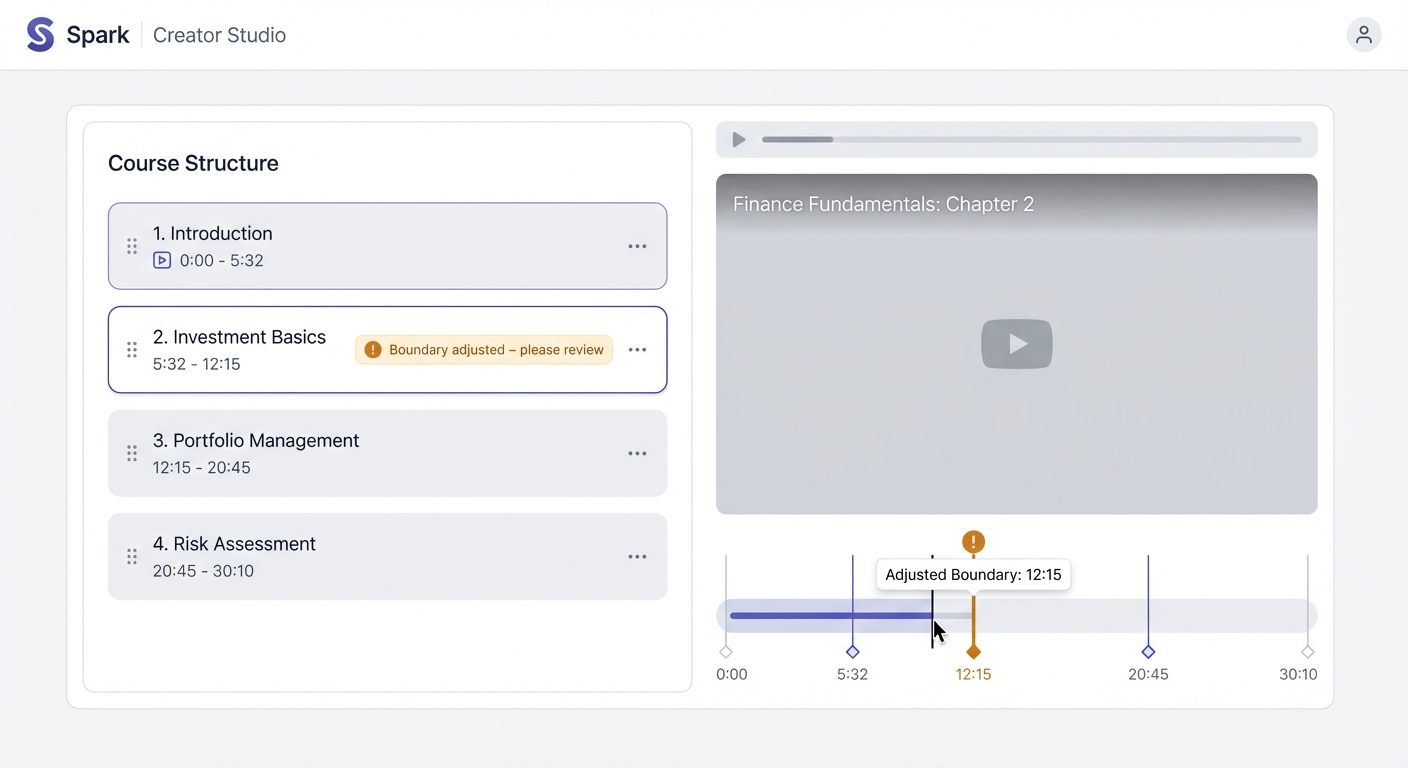
Boundary verification
Spark cross-checks chapter boundaries and flags adjustments for your review - no silent errors.
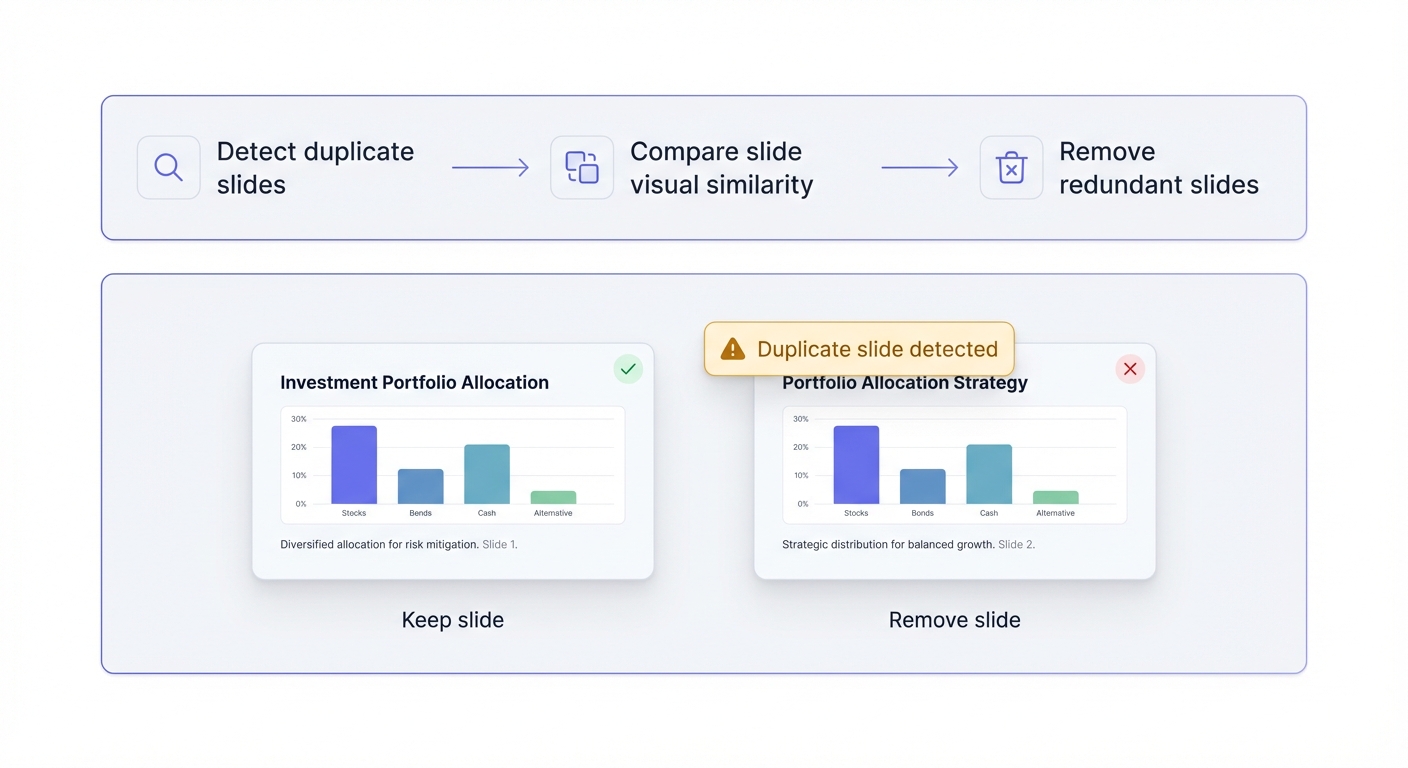
Slide duplicate detection
Duplicate slides are automatically detected and removed - students see unique, meaningful slides.
Tap an image to view it full screen.
-
check_circle
Chapter boundaries cross-checked against transcripts - fixes applied automatically when needed.
-
check_circle
Visual duplicates detected and removed - no redundant slides cluttering the course.
-
check_circle
Missing slides flagged as issues - you see problems before students encounter them.
forum A tutor that knows its place
The course tutor is intentionally narrow‑minded: it answers from your course, not from the open internet. Every reply is based on notes and chapters that were indexed beforehand, and those same snippets are surfaced back to the student as gentle references.
If a question falls completely outside the course, the tutor is encouraged to say so and redirect the student, instead of inventing an answer just to be helpful.
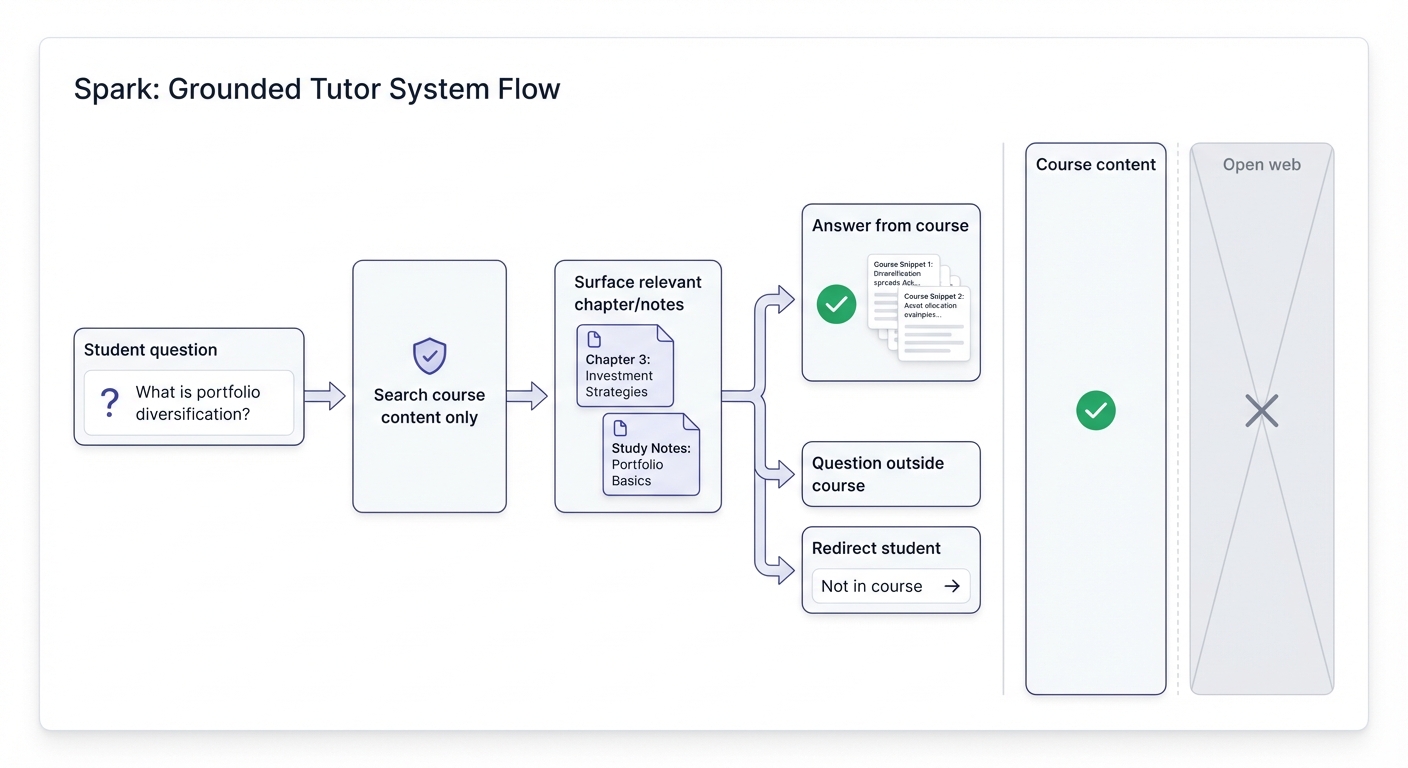
Course-only answers
The tutor stays within your course universe - answers are grounded in what you actually taught.
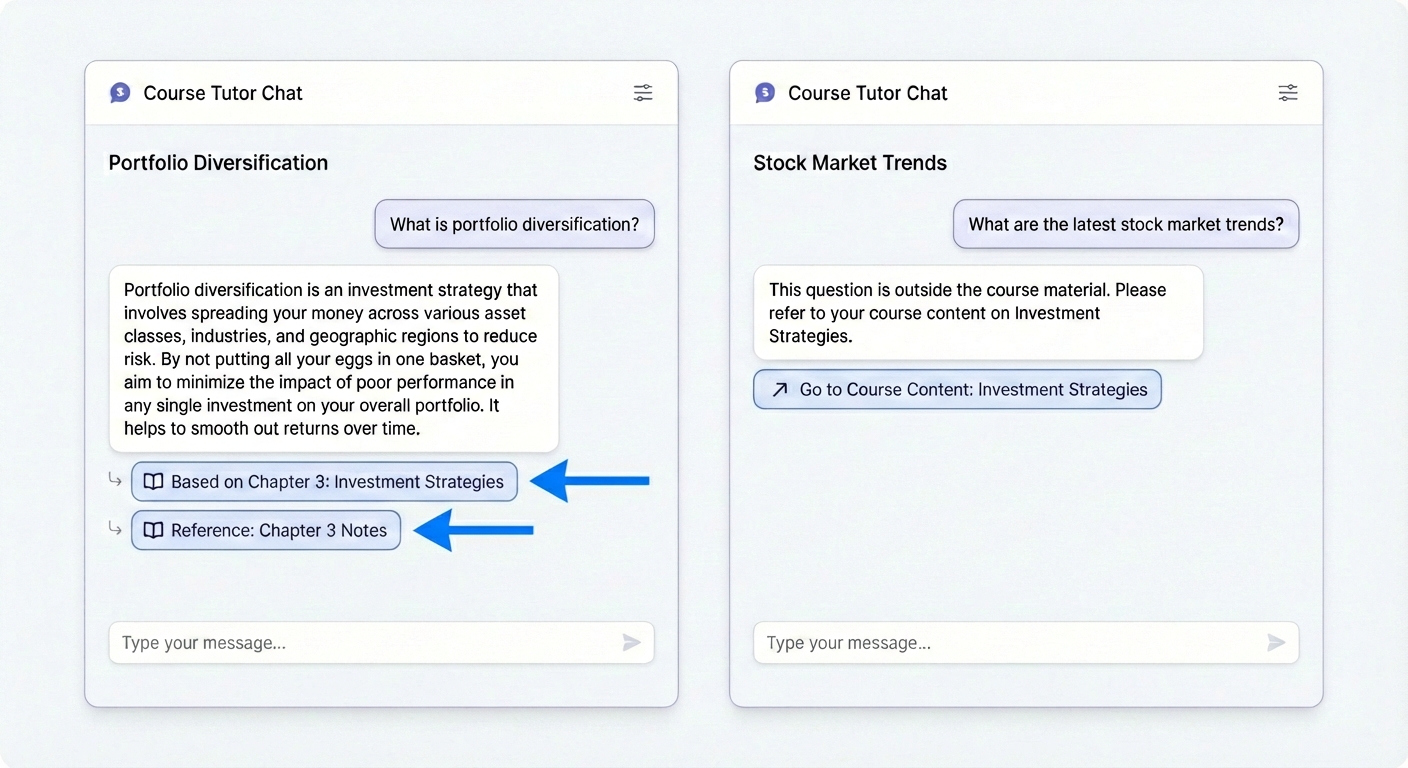
Source transparency
Every answer shows which chapters or notes it came from - students know where the information originated.
Tap an image to view it full screen.
-
verified
Answers constrained to your indexed course content - no open web hallucination.
-
link
Source chapters and notes surfaced with every answer - full transparency for students.
-
block
Out-of-scope questions get honest redirects - no inventing answers to be helpful.